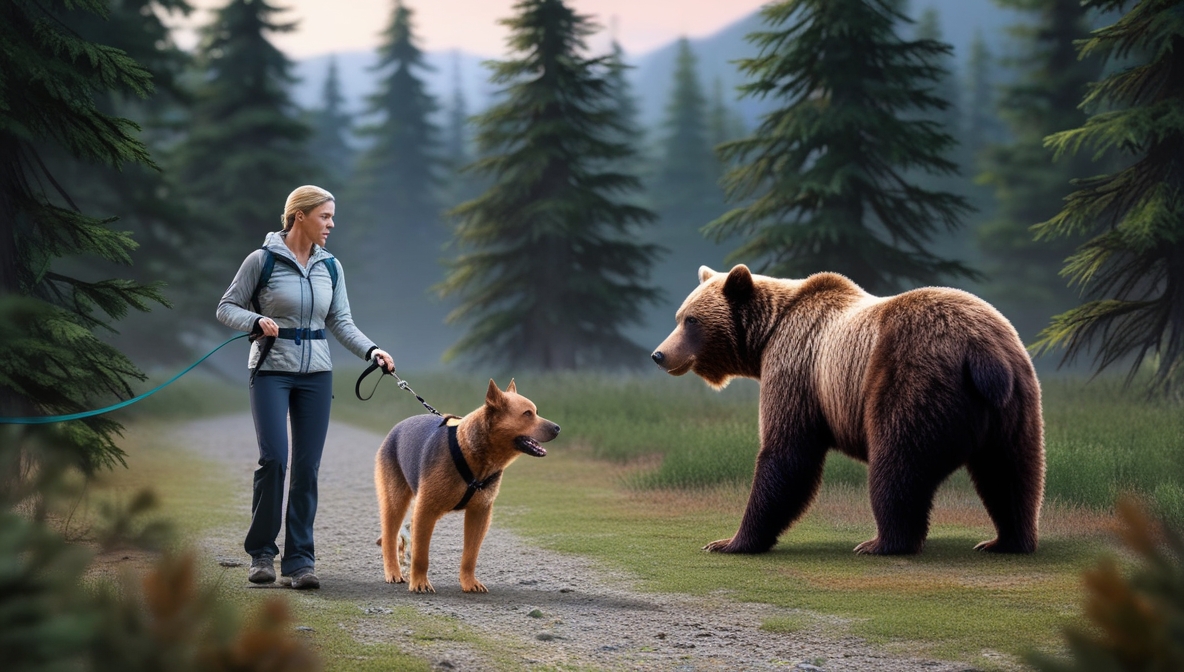
A grizzly bear dog walker encounter is one of the most serious wildlife incidents a dog owner can face. These events are not random “bear attacks” they are defensive reactions triggered by human activity, dogs, or surprise proximity.
Every year, more people take their dogs into forest trails and backcountry areas where grizzly bears live. While bears generally avoid humans, the presence of a dog adds unpredictability. Understanding why encounters happen, how bears behave, and what dog owners can do to prevent conflict is critical for safety and coexistence.
Section 1: The World of the Grizzly Bear
Grizzly bears are some of the strongest mammals in North America. Historically, they roamed vast regions, and although populations are now fragmented, their instincts remain sharp.
A grizzly bear dog walker encounter often occurs when humans enter critical areas like:
- Feeding zones with berries, nuts, or fish
- Travel corridors between dens or seasonal habitats
- Protective zones around cubs or food caches
Bears rely on smell, sight, and memory. A sudden dog barking or a human appearing in their path can trigger an instinctive defensive response.
Section 2: Why Dog Walkers Face Extra Risk
Dog walkers are uniquely vulnerable because dogs:
- Run ahead and startle bears at close range
- Bark loudly, triggering defensive or predatory instincts
- Retreat toward owners, bringing bears closer
Most serious incidents involve off-leash dogs, highlighting the importance of keeping pets controlled in bear country.
Section 3: Common Triggers for Aggressive Encounters
A grizzly bear dog walker encounter usually has a clear cause:
- Close-range surprise: Sudden encounters leave little reaction time.
- Cub protection: Female bears defend cubs aggressively.
- Food defense: Bears defending caches or feeding areas may charge.
- Perceived pursuit: Dogs chasing or running near bears can be mistaken for predation.
Knowing these triggers can help dog owners prevent escalation.
Section 4: Real-Life Example
| Category | Details |
|---|---|
| Incident Type | Grizzly bear dog walker encounter |
| Location | Mountain trail, dense forest |
| Time of Day | Early morning |
| Human Activity | Recreational dog walking |
| Dog Status | Off-leash |
| Bear Condition | Adult female grizzly |
| Presence of Cubs | Suspected |
| Trigger Event | Dog ran ahead and barked |
| Bear Response | Defensive charge |
| Human Response | Attempted retreat |
| Outcome | Serious injuries, non-fatal |
| Environmental Factors | Dense vegetation, limited visibility |
| Key Lesson | Leash control and situational awareness |
This example shows that most encounters are predictable and can be prevented with proper precautions.
Section 5: Habitat Overlap and Human Expansion
Human trails and developments often intersect with bear habitats. Bears do not recognize property lines or trails they see humans and dogs as potential threats.
A grizzly bear dog walker encounter is rarely random; it’s often the result of overlapping territories and survival strategies.
Section 6: How Bears See Humans and Dogs
Humans often misinterpret a bear’s behavior as aggression. In reality, bears have:
- Exceptional hearing and smell
- Instant threat assessment instincts
- Rapid decision-making for defense or escape
Dogs can complicate this, increasing the likelihood of a defensive charge.
Section 7: Psychological Impact
Beyond injuries, survivors often experience:
- Anxiety in outdoor areas
- Avoidance of trails
- Intrusive memories and stress
Preventing encounters through education is far better than relying on luck or reaction.
Section 8: How Media Shapes Perception
News stories often sensationalize grizzly bear dog walker encounters, which can lead to:
- Unnecessary fear of wildlife
- Calls for bear removal
- Reduced conservation support
Balanced, fact-based reporting encourages coexistence rather than panic.
Section 9: Practical Safety Tips for Dog Walkers
Dog owners can reduce risk by following simple steps:
- Keep dogs on a short leash in bear habitats.
- Avoid dense, low-visibility areas.
- Make controlled noise (talk, bells, or soft calls).
- Watch for fresh tracks or scat as signs of nearby bears.
- Carry legal deterrents like bear spray and know how to use them.
Calm, prepared behavior reduces risk for both humans and bears.
Section 10: Shared Responsibility and Ethics
Ethical dog walking in bear country means:
- Respecting wildlife and natural spaces
- Understanding local regulations and seasonal risks
- Acknowledging humans are visitors, not owners, of these ecosystems
Shared responsibility protects people and wildlife alike.
Section 11: Community Strategies
Communities can lower incidents through:
- Clear trail signage about bear activity
- Seasonal access restrictions in high-risk areas
- Public education programs for dog walkers
- Enforcement of leash laws
These policies protect lives and promote safe coexistence.
Section 12: Why Understanding Matters
A grizzly bear dog walker encounter reflects broader issues:
- Human expansion into natural habitats
- Environmental pressures on wildlife
- The need for education and preparedness
Every encounter is an opportunity to learn, adapt, and improve safety for both species.
Conclusion: Safety Through Awareness
The key to surviving a grizzly bear dog walker encounter is knowledge, preparedness, and respect. Grizzlies follow instinctive survival codes, while humans must adapt to prevent conflict.
Education, leash control, situational awareness, and ethical behavior transform fear into respect and encounters into lessons rather than tragedies.
FAQs: What Every Dog Walker Should Know
How should I act if I see a grizzly while walking my dog?
Stay calm, keep your dog on a leash, speak firmly, and back away slowly. Avoid running.
Are off-leash dogs dangerous around bears?
Yes. Off-leash dogs can startle bears and increase the risk of defensive charges.
Can bear spray prevent escalation?
Yes. When used correctly, bear spray is highly effective in stopping charging bears.
Which areas are highest risk?
Mountain trails, dense forests, and regions with known bear activity.
How can communities reduce incidents?
Leash laws, signage, education programs, and seasonal restrictions can significantly lower risks.